
Service · Chicago area
Emergency plumbing: what to do right now
Water where it shouldn’t be, no water at all, or sewage coming up. Here are the safe first steps while you call.
Calls are answered by a referral service that connects you with a local plumbing provider. How this works
First five minutes
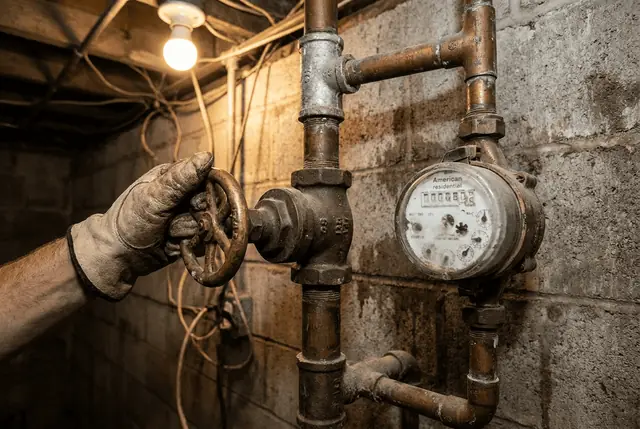
- Stop the water. Close the valve under the fixture, or the main shutoff (usually where the water line enters the basement, near the meter).
- Stop using drains if sewage or dirty water is backing up anywhere in the building.
- Protect people first, then belongings: move valuables up, keep children and pets away from sewage.
- In a multi-unit building, tell neighbors and building management — the source may be in another unit.
- Take photos for insurance before cleanup.
What usually counts as an emergency
| Situation | Why it is urgent | Guide |
|---|---|---|
| Burst or split pipe | Continuous water damage; often after a freeze | Frozen pipes |
| Sewage backing up from a floor drain or toilet | Contamination; can affect the whole building | Sewer backup |
| Basement flooding | Electrical risk, property damage | Basement flooding |
| Water heater leaking heavily | Hot water and gas or electric connections | Water heater |
| No water to the building | Could be a frozen or broken service line | Service lines |
| Sump pump failed during heavy rain | Groundwater rising fast | Sump pump problems |
Find your shutoffs before you need them
- Service line — material may be lead, galvanized, copper or other; check the City inventory.
- Curb stop / buffalo box — a valve typically in the parkway, operated by the utility.
- Inside shutoff valve — know where yours is before an emergency.
- Water meter. Where City and owner responsibilities split varies — confirm with your water utility (311 in Chicago).
In most Chicago-area homes the main shutoff is inside, where the water service enters through the foundation wall, just before or after the meter. The curb stop in the parkway is a utility valve — call your water utility (311 in Chicago) rather than operating it yourself.
When to call the City or utility instead
- Water bubbling up in the street or parkway, or a break on the public side: Chicago 311 or your municipality’s public works.
- A leaking or broken service line in Chicago: report it to 311 — the City has described replacing lead lines at no cost when they break or leak.
- Street flooding or sewer surcharge: report to your municipality (311 in Chicago).
- Gas odor: gas utility or 911, from outside.
What affects the cost
We do not publish prices. Providers typically consider: the time of day and urgency, what failed, access (finished ceilings or walls), whether parts are on hand, follow-up repairs, and any permits. Ask how the price is calculated before work starts.
Licensing and permits
In Chicago, most plumbing work must be done by a licensed and bonded plumbing contractor holding a City of Chicago license in addition to State licensing. In the suburbs, plumbers are licensed by the State and each municipality runs its own permits. Chicago permits · Illinois licensing
Emergency repairs can still require permits afterward, for example when drain or water piping is replaced.
Frequently asked questions
Where is my main water shutoff?
Usually in the basement or utility room where the water line comes through the foundation wall, near the meter. Turn it clockwise to close. If it will not move, do not force it — old valves can break.
Should I turn off the water heater too?
If you close the main for a long period or the heater itself is leaking, follow the manufacturer’s instructions for turning it off. With gas units, if you are unsure, leave it to a professional.
Can I keep using the toilet if the floor drain is backing up?
No. Every drain in the building leads to the same building sewer; using any fixture can push more water out of the lowest opening.
Related
- Basement floodingCauses and first steps
- Frozen pipesBurst pipe risk
- Sewer backupSewage in the basement
- Basement water guideFind the source
Sources
- City of Chicago Department of Water Management Official / primary
- Metropolitan Water Reclamation District — Understanding Your Sewer Official / primary
- City of Chicago — Does my project require a licensed plumbing contractor? Official / primary
Information can change; official sources control.