
Problem · Chicago area
Why does my sump pump keep running?
After days of rain or snowmelt, frequent cycling can be normal. Running nonstop in dry weather, or short-cycling every few seconds, usually means something is wrong.
Calls are answered by a referral service that connects you with a local plumbing provider. How this works
When it may be normal
In spring thaw and long rainy periods, the water table rises and drain tile can deliver a steady flow — the pump may run often for days. Newer suburban subdivisions with high groundwater commonly see this.
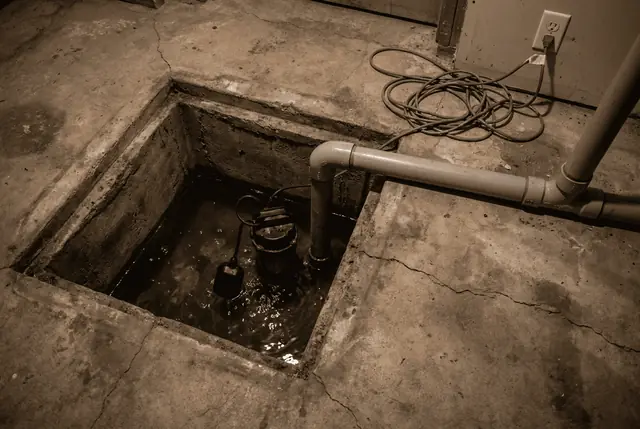
- Drain tile collects groundwater around the foundation.
- Primary pump runs on household power.
- Battery backup pump can run during an outage, for a limited time.
- Check valve keeps discharged water from falling back into the pit.
- Discharge outlet — local rules may say where it can discharge.
Common causes of problems
| What you notice | Possible cause |
|---|---|
| Runs nonstop, water level not dropping | Pump worn out or undersized; clogged intake; blocked or frozen discharge |
| Runs nonstop, pit is empty | Float switch stuck in the "on" position |
| Short-cycles every few seconds | Failed check valve letting water fall back; float set too tight |
| Runs in dry weather | Water from another source (a leak, irrigation, or a high water table) |
| Hums but does not pump | Jammed impeller or failing motor |
Safe checks
- From outside, check that the discharge line is not frozen, crushed or buried.
- Listen for water rushing back into the pit after the pump stops (check valve).
- Note whether the float can move freely — without touching it while powered.
When to call
- The pump is running constantly and the water is not going down.
- Rain is coming and you have no backup pump.
- The pump is old, noisy or tripping the breaker.
Frequently asked questions
How long should a sump pump run each cycle?
It varies with pit size, pump capacity and inflow. Very short cycles (seconds) or no stop at all are the warning signs.
Can a constantly running pump burn out?
Yes — motors are not designed to run nonstop indefinitely. That is one reason a backup pump matters.
Does it matter where the water discharges?
Yes. Discharge too close to the foundation can recirculate back into the pit; many municipalities prohibit discharge into the sanitary sewer.
Related
- Sump pump repair & installationService
- Naperville sump pumpsSuburban homes
- Basement water guideCompare sources
- Basement floodingOverview
Sources
- Village of Oak Park — Basement Flooding Prevention Official / primary
- City of Elmhurst — Overhead Sewer Program (2023 PDF) Official / primary
Information can change; official sources control.