
Service · Chicago area
Repiping older homes and two-flats
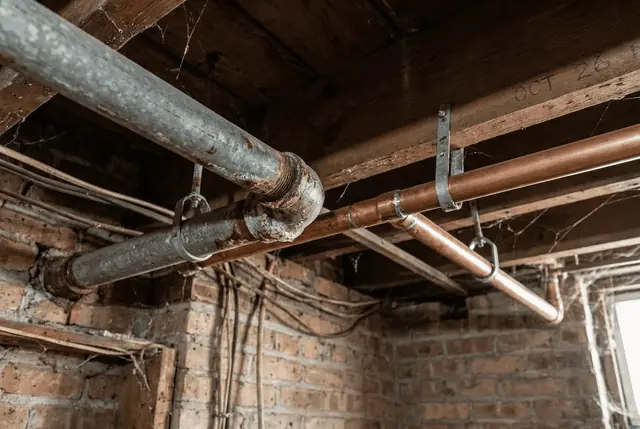
Many Chicago-area buildings still have original galvanized supply pipes or cast-iron drains. Replacing them can be done all at once or in stages.
Calls are answered by a referral service that connects you with a local plumbing provider. How this works
Signs it may be time
- Low pressure, especially on upper floors or hot water.
- Rust-colored water after it sits.
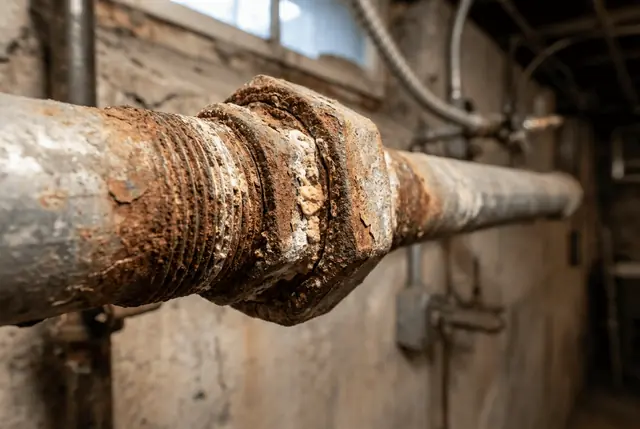
- Recurring leaks at threaded joints.
- Rust weeping or stains on cast-iron stacks.
- Renovation already opening walls.
Why it is common here
More than 39% of Chicago housing units were built in 1939 or earlier, and 2–4 unit buildings hold about a quarter of the City’s units.
Source: Chicago Metropolitan Agency for Planning — Local Housing Profiles; DePaul Institute for Housing Studies — Characteristics of the 2 to 4 stock in Chicago neighborhoods
Buildings of that age were commonly plumbed with galvanized steel supply and cast-iron drains; many have been partly updated over the decades. Pipe materials guide
All at once or in phases
| Approach | Pros | Cons |
|---|---|---|
| Whole building at once | One disruption; consistent materials | Larger upfront project; all units affected |
| Supply first, drains later | Addresses pressure and water quality | Walls may be opened twice |
| Unit by unit | Aligns with renovations or turnovers | Shared risers may still need building-wide work |
| Stack replacement | Targets a failing cast-iron stack | Coordination with every unit on the stack |
Materials and code
Chicago has its own plumbing code and is transitioning to the 2026 Chicago Construction Codes; the code edition in effect when the permit is filed applies.
Source: City of Chicago DOB — Modernizing Chicago’s Construction Codes; City of Chicago — Express Permit Program: Plumbing Work
What we could not confirm
- Which plastic piping materials the current Chicago Plumbing Code allows for specific uses — ask the provider and confirm with DOB.
Check with the official source before relying on these points.
Don’t forget the service line
If the building’s water service line contains lead, interior repiping alone does not remove it. See lead service lines.
What affects the cost
We do not publish prices. Providers typically consider: building size and number of units, materials allowed and chosen, access and wall openings, phasing, permits and inspections, and restoration. Ask how the price is calculated before work starts.
Frequently asked questions
Do I need a permit to repipe?
Yes. In Chicago, replacing water, drain, waste or vent piping requires a permit and inspections; suburbs also require permits for this kind of work.
Can tenants stay during repiping?
Often yes with planned shutoffs, depending on scope. Coordinate notice and water outages in advance.
Copper or plastic?
Material choice depends on what the applicable code allows, budget and the building. Ask the provider to explain the options allowed where you are.
Related
- Pipe materialsCompare materials
- Low water pressureCommon symptom
- Two-flat plumbingShared risers
- Lead service linesThe pipe outside
Sources
- Chicago Metropolitan Agency for Planning — Local Housing Profiles Official / primary
- DePaul Institute for Housing Studies — Characteristics of the 2 to 4 stock in Chicago neighborhoods Secondary
- City of Chicago DOB — Modernizing Chicago’s Construction Codes Official / primary
- City of Chicago — Express Permit Program: Plumbing Work Official / primary
- Municipal Code of Chicago, Ch. 14A-4 (Permits) Official / primary
Information can change; official sources control.