
Service · Chicago
Drain cleaning in Chicago
Slow sinks, gurgling floor drains and backups that affect more than one unit. Here is how drain problems usually show up in Chicago buildings, and what a provider will look at.
Calls are answered by a referral service that connects you with a local plumbing provider. How this works
When a drain needs more than a plunger
A single slow fixture usually means a local clog in that fixture's branch line. When several fixtures are slow, when the lowest drain in the building (often a basement floor drain) backs up, or when using one fixture makes another gurgle, the blockage is more likely in a shared line: the stack or the building sewer.
Symptoms to note before you call
- Which fixtures are slow or backing up — one, several, or every drain in the building.
- Whether water appears at the basement floor drain when upstairs fixtures run.
- Whether it happens in dry weather or only during heavy rain.
- Gurgling, sewer odor, or water around a cleanout.
- In a 2–4 unit building: whether other units have the same problem.
Common causes
| Location | Typical causes | Notes |
|---|---|---|
| Kitchen line | Grease, food solids, scale in older small-diameter pipe | Older buildings may have small galvanized kitchen drains |
| Bathroom lines | Hair, soap residue, objects | Usually local to one fixture |
| Shared stack | Buildup from several units, corroded cast iron | Affects everyone above the blockage |
| Building sewer | Tree roots, offset or broken joints, sagging sections, grease | Often shows first at the basement floor drain |
| Floor drain | Debris, dry trap (odor), backup from building sewer | Rain-only backups suggest a street sewer surcharge |
How the building type changes the job
Two-flats and greystones share a drain stack and one building sewer, so a main-line clog affects every unit — usually the garden unit first. Bungalows typically have one stack and a basement floor drain as the lowest opening. Condo and high-rise owners should contact building management before any work on shared lines.
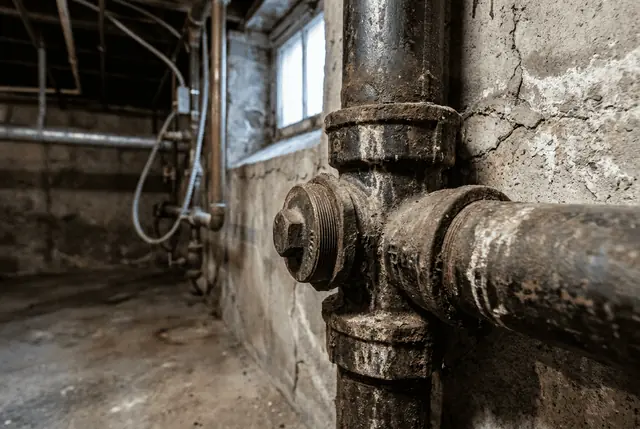
- Shared drain-waste-vent stack — a clog or crack affects every unit above it; older buildings often have cast iron.
- Shared water riser — corrosion and scale in older galvanized pipe can reduce pressure for all units.
- Garden/basement unit — lowest fixtures, so most exposed to backups.
- One building sewer serves the whole building.
Chicago considerations
Most of Chicago uses combined sewers, so not every backup is a clog: during heavy rain the street sewer itself can push water back. Distinguishing a dry-weather blockage from a wet-weather backup changes what will help.
A City of Chicago sewer permit is required to construct, repair, rod or clean sewers; only licensed drainlayers can obtain one. The Department of Buildings lists limited exceptions, such as rodding by a licensed drainlayer with a call-in.
How a provider typically diagnoses it
- Questions about which fixtures are affected and when.
- Locating a cleanout to access the line.
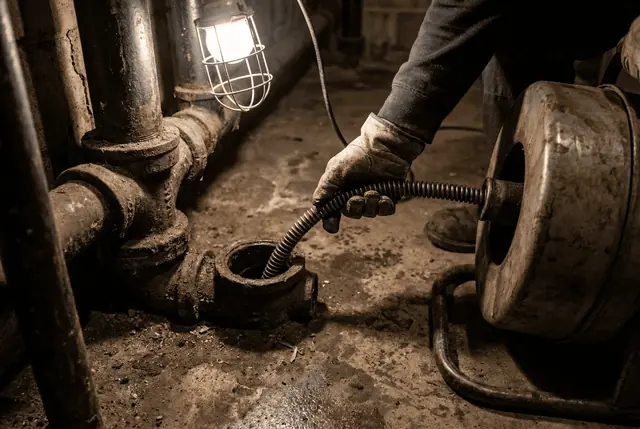
- Clearing the blockage by rodding or jetting, as suited to the pipe.
- A sewer camera inspection if backups repeat, roots are suspected, or the line is old — recorded footage helps you understand the condition.
Possible outcomes
- Clearing the line, with advice on what caused it.
- Recommending a camera inspection.
- Spot repair or replacement of a damaged section of building sewer (permit work in Chicago).
- Backflow protection if backups are rain-driven.
What affects the cost
We do not publish prices. Providers typically consider: where the blockage is and how it can be reached (cleanout access, finished basements); line length and diameter; pipe material and condition; whether a camera inspection is needed; time of day and urgency; and whether repairs, permits or digging follow. Ask for the price basis before work starts.
Licensing and permits
In Chicago, most plumbing work requires a licensed and bonded plumbing contractor holding a City of Chicago license, in addition to State licensing. Sewer work requires a licensed drainlayer and a sewer permit. Chicago plumbing permits explained.
Frequently asked questions
What is the difference between rodding and hydro jetting?
Rodding (cabling) runs a rotating cable through the line to cut or break up a blockage. Hydro jetting uses high-pressure water to scour the pipe walls. Which is appropriate depends on the pipe material, its condition and what is causing the blockage — a camera inspection often helps decide. Old, fragile cast iron or clay may not suit aggressive cleaning.
Why does my basement floor drain back up when it rains but not otherwise?
A backup that only happens in heavy rain points toward the street sewer filling up (common with combined sewers), not necessarily a clog in your line. Cleaning your drain won’t prevent that; backflow protection might. See basement flooding.
Does drain cleaning need a permit in Chicago?
Clearing a fixture drain inside the building generally doesn’t involve replacing pipe. Work on the building sewer is different: Chicago requires a sewer permit for construction, repair, rodding or cleaning of sewers, with limited call-in exceptions for licensed drainlayers. Confirm with the provider and the Department of Buildings.
Can chemical drain cleaners damage old pipes?
Product labels warn about pipe and personal-safety risks. In older buildings with cast iron or galvanized drains, many plumbers advise against caustic cleaners. Never mix products, and tell the plumber what you have already used.
Related
- Basement floodingRain-driven backups
- Two-flat plumbing guideShared stacks
- Drain cleaning in NapervilleSuburban version
- Sewer camera inspectionSee inside the line
Sources
- City of Chicago DOB — Sewer Permits Official / primary
- City of Chicago — Does my project require a licensed plumbing contractor? Official / primary
- Metropolitan Water Reclamation District — Understanding Your Sewer Official / primary
Information can change; official sources control.