
Service · Chicago area
Sump pump repair and installation
A sump pump moves groundwater collected around your foundation out of the house. When it fails during heavy rain, the basement can flood within hours.
Calls are answered by a referral service that connects you with a local plumbing provider. How this works
How a sump system works
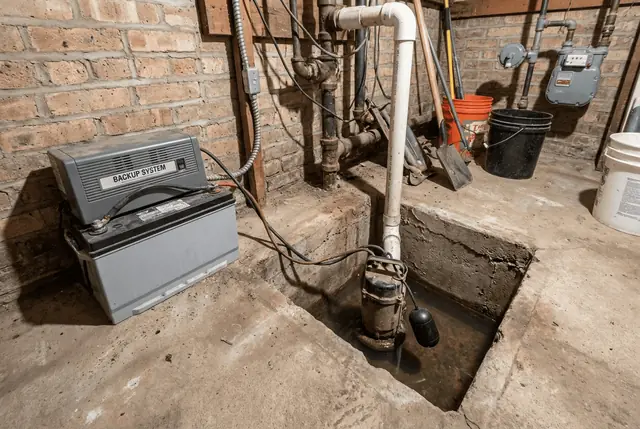
- Drain tile collects groundwater around the foundation.
- Primary pump runs on household power.
- Battery backup pump can run during an outage, for a limited time.
- Check valve keeps discharged water from falling back into the pit.
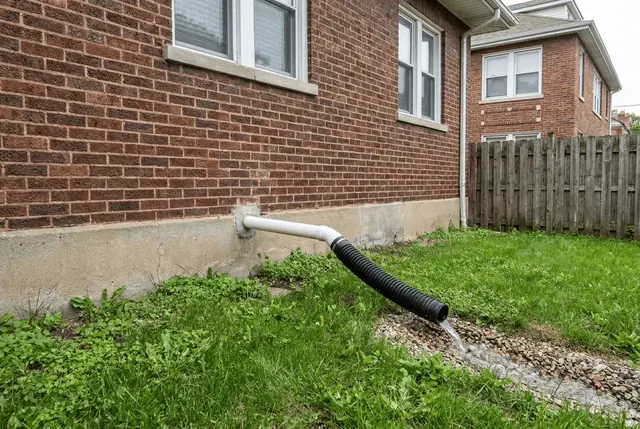
- Discharge outlet — local rules may say where it can discharge.
Signs of trouble
- The pump hums but water does not drop.
- It runs constantly, or cycles on and off rapidly.
- Water in the pit near the top with the pump silent.
- Loud grinding or rattling.
- The discharge line outside is frozen, crushed or blocked.
Backup power
Primary pumps need household power, and storms that bring heavy rain often bring outages. Battery backup pumps can keep running for a limited time; water-powered backups exist where water pressure and local rules allow. Some municipalities have included battery backups in flood rebate programs — Des Plaines for example.
Where the water goes
Sump water is groundwater and should discharge outside, away from the foundation. Many municipalities prohibit connecting sump pumps or footing drains to the sanitary sewer, because clean water in the sanitary system contributes to basement backups for everyone. Schaumburg and Elmhurst, for instance, tie their overhead-sewer cost-share programs to separating stormwater from the sanitary sewer.
Permits
Oak Park, for example, states that most changes to home plumbing — including drain tile and sump pump installations — need permits.
Rules vary; replacing a pump like-for-like may be treated differently from a new pit or drain tile. Confirm locally.
What affects the cost
We do not publish prices. Providers typically consider: pump type and capacity, pit condition, check valve and discharge piping, battery backup, electrical needs (a dedicated outlet may be required), and whether drain tile work is involved. Ask how the price is calculated before work starts.
Frequently asked questions
Is a sump pump the same as an ejector pump?
No. A sump pump handles groundwater. An ejector pump lifts sewage from basement fixtures in a sealed pit. They need different equipment and should never be combined.
How often should I test my sump pump?
Many manufacturers suggest testing before the spring thaw and storm season by slowly adding water to the pit. Follow your pump’s manual.
Will a sump pump stop sewer backups?
No. Sewer backups come through drains from the sewer; a sump pump handles groundwater. Backflow protection addresses sewer backups.
Related
- Sump pump keeps runningTroubleshooting
- Naperville sump pumpsSuburban version
- Basement water guideCompare sources
- Backwater valvesSewer backups
Sources
- Village of Oak Park — Basement Flooding Prevention Official / primary
- City of Des Plaines — Flood Rebate Program Official / primary
- Village of Schaumburg — Overhead Sewer Cost Share Program Official / primary
- City of Elmhurst — Overhead Sewer Program (2023 PDF) Official / primary
Information can change; official sources control.