
Service · Chicago area
Leak detection and pipe repair
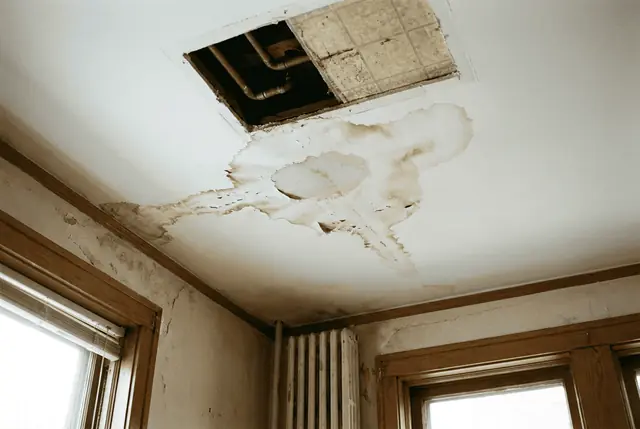
A stain on the ceiling, a meter that moves when nothing is running, or a higher water bill. Finding the leak is often harder than fixing it.
Calls are answered by a referral service that connects you with a local plumbing provider. How this works
Signs of a hidden leak
- Water meter moving with every fixture off.
- Stains, bubbling paint or soft drywall.
- Musty smell, warped floors.
- Sound of running water at night.
- In multi-unit buildings: water appearing in the unit below.
A simple check you can do
- Make sure no water is being used (including ice makers and softeners).
- Look at the meter’s leak indicator or note the reading.
- Wait 15–30 minutes without using water and check again.
- Movement suggests a leak somewhere after the meter.
Leaks between units
- Shared drain-waste-vent stack — a clog or crack affects every unit above it; older buildings often have cast iron.
- Shared water riser — corrosion and scale in older galvanized pipe can reduce pressure for all units.
- Garden/basement unit — lowest fixtures, so most exposed to backups.
- One building sewer serves the whole building.
In two-flats, courtyard buildings and condos, the source is often a shower pan, tub drain, toilet seal or supply connection in the unit above. Coordinate access with neighbors and management, and document everything for insurance.
How leaks are located
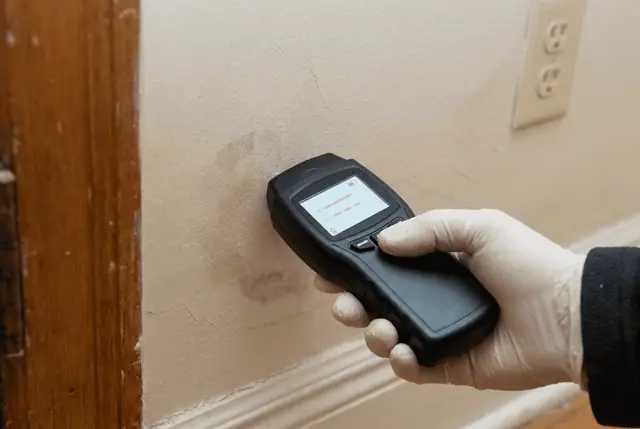
Providers use a combination of pressure testing, moisture meters, listening devices, thermal imaging and selective opening of walls or ceilings, depending on the situation. Ask what methods will be used and what openings may be needed.
Repair and permits
In Chicago, removing and replacing any water, drain, waste or vent pipe requires a permit and inspections.
Small repairs to fixtures may not require a permit; pipe replacement usually does. Suburbs vary.
What affects the cost
We do not publish prices. Providers typically consider: how hard the leak is to locate, access through finished surfaces, pipe material, how many units are affected, permits, and wall or ceiling restoration (often a separate trade). Ask how the price is calculated before work starts.
Frequently asked questions
Who pays when my upstairs neighbor’s leak damages my ceiling?
That depends on ownership, association rules and insurance — a legal and insurance question, not a plumbing one. A plumber can document the source.
Can a leak be under the basement floor?
Yes, supply or drain lines under slabs can leak. Locating them may need specialized equipment.
Is a high water bill always a leak?
Not always — running toilets are a common cause. A meter test helps narrow it down.
Related
- RepipingOld supply lines
- Two-flat plumbingShared risers
- Low water pressureRelated symptom
- Emergency plumbingActive leaks
Sources
- Municipal Code of Chicago, Ch. 14A-4 (Permits) Official / primary
- City of Chicago — Does my project require a licensed plumbing contractor? Official / primary
Information can change; official sources control.