
Service · Chicago area
Backwater valves and overhead sewers
In a combined-sewer area, heavy rain can push sewage back into the lowest drains of your building. Two main protections exist, and many suburbs help pay for them.
Calls are answered by a referral service that connects you with a local plumbing provider. How this works
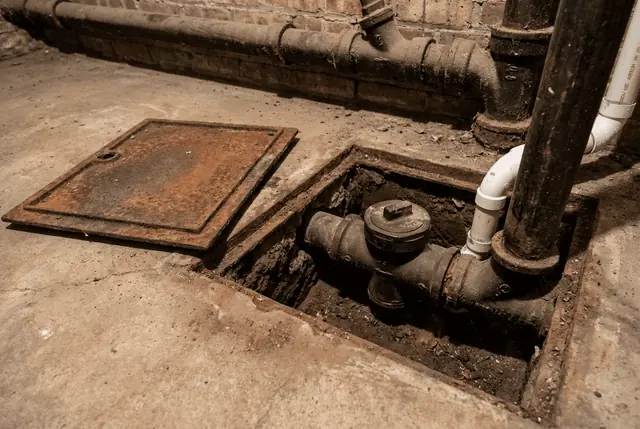
Backwater valve
- Basement floor drain — the lowest opening, so usually the first place sewer water appears.
- Private sewer lateral (building sewer) — typically the owner’s responsibility.
- Backwater valve — a flap that is meant to close when flow reverses; needs an access cover for cleaning and inspection.
- Combined street sewer — during heavy rain it can fill and back up toward buildings (MWRD).
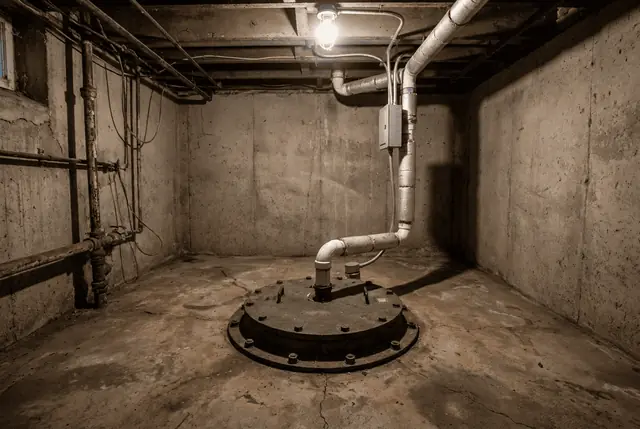
Overhead sewer
- Ejector pump with check valve lifts basement wastewater up; it needs power, so outages matter.
- Overhead sewer line runs near the basement ceiling.
- Building sewer exits the wall at a higher elevation.
- Former floor-level openings are sealed under the design.
Side by side
| Aspect | Backwater valve | Overhead sewer |
|---|---|---|
| How it works | Flap closes when flow reverses | Sewer connection raised; basement fixtures pumped up |
| Needs power | No | Yes (ejector pump) |
| During a storm | Avoid using drains while closed | Upper floors drain normally |
| Maintenance | Periodic cleaning per manufacturer | Pump and check valve upkeep |
| Typical scope | Excavation at the building sewer | Basement plumbing reconfigured |
MWRD describes check valves and overhead sewers as valuable home improvements that prevent sewer backups when properly installed, and advises cleaning backwater valves per manufacturer instructions.
Source: Metropolitan Water Reclamation District — Understanding Your Sewer
Local cost-share programs
| Municipality | Program (as published) | Page |
|---|---|---|
| Oak Park | Sewer Backup Protection Grant, max. $3,500 (2024) | Oak Park |
| Schaumburg | Overhead sewer cost share: 50% up to $5,000, detached single-family | Schaumburg |
| Elmhurst | Overhead sewer program: 50% up to $5,000 (2023) | Elmhurst |
| Joliet | Overhead sewer conversion and backflow prevention cost sharing; documented backup required | Joliet |
| Des Plaines | Flood rebate: 30% up to $2,000 | Des Plaines |
| Chicago | No City-funded private valve program found at last review | Basement flooding |
Permits
Both are permit work in Chicago and in the suburbs we reviewed. Cost-share programs typically require permits, pre-approval or inspections — read the program rules before work starts.
In Chicago, most plumbing work must be done by a licensed and bonded plumbing contractor holding a City of Chicago license in addition to State licensing. In the suburbs, plumbers are licensed by the State and each municipality runs its own permits. Chicago permits · Illinois licensing
What affects the cost
We do not publish prices. Providers typically consider: depth and route of the building sewer, basement floor and finishes, number of basement fixtures, ejector and electrical work, permits, and restoration. Ask how the price is calculated before work starts.
Frequently asked questions
Which is better, a valve or an overhead sewer?
It depends on the building, how the basement is used and the sewer layout. Overhead sewers let upper floors drain during a storm but rely on a pump; valves are simpler but close the whole line while shut.
Will a backwater valve stop groundwater flooding?
No. It only blocks sewage flowing backward through the drains. Groundwater is handled by drain tile and sump pumps.
Do I need a permit?
Yes, in the jurisdictions we reviewed. Programs that reimburse the work generally require the permit too.
Related
- Basement floodingWhy it happens
- Sewer backupWhat to do
- Evanston overhead sewersCombined-sewer suburb
- Sump pumpsGroundwater
Sources
- Metropolitan Water Reclamation District — Understanding Your Sewer Official / primary
- Village of Oak Park — Sewer Backup Protection Grant (2024 application packet) Official / primary
- Village of Schaumburg — Overhead Sewer Cost Share Program Official / primary
- City of Elmhurst — Overhead Sewer Program (2023 PDF) Official / primary
- City of Joliet — Overhead Sewer Conversion and Backflow Prevention Cost Sharing Program Official / primary
- City of Des Plaines — Flood Rebate Program Official / primary
Information can change; official sources control.