
Problem · Chicago area
What causes a sewer backup — and what to do
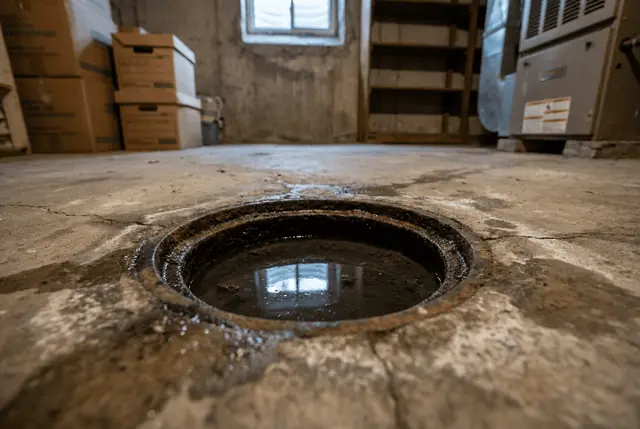
Dark water rising from the floor drain is one of the worst sights in a basement. The cause is either the public sewer filling up in a storm, or a blockage in your own line.
Calls are answered by a referral service that connects you with a local plumbing provider. How this works
Safe first steps
Safety first Stop using all water in the building. Keep people and pets out of the water, avoid skin contact, and keep away from water near electrical equipment. Do not open ejector pits. Ventilate if you can do so safely.
Wet-weather or dry-weather?
| Aspect | Wet-weather backup | Dry-weather backup |
|---|---|---|
| When | During or after heavy rain | Any time, often when fixtures run |
| Cause | Public sewer surcharged (common in combined-sewer areas) | Blockage or damage in your building sewer |
| Neighbors affected? | Often several homes on the block | Usually just your building |
| What helps | Backflow protection; report flooding to the municipality | Drain cleaning, camera inspection, repair |
In Chicago, report flooding to 311.
How it gets in
- Basement floor drain — the lowest opening, so usually the first place sewer water appears.
- Private sewer lateral (building sewer) — typically the owner’s responsibility.
- Backwater valve — a flap that is meant to close when flow reverses; needs an access cover for cleaning and inspection.
- Combined street sewer — during heavy rain it can fill and back up toward buildings (MWRD).
After the water goes down
- Photograph everything for insurance before cleanup.
- Sewage-contaminated porous materials (carpet, drywall, insulation) are generally discarded, not dried.
- Professional sewage cleanup may be appropriate for larger backups — that is a remediation trade, not plumbing.
- Have the line checked if the backup happened in dry weather.
Preventing the next one
- Wet-weather: backwater valve or overhead sewer — compare options; check your suburb’s cost-share program.
- Dry-weather: avoid grease and wipes; have roots and damage found by camera inspection.
- Keep sump pumps and downspouts out of the sanitary sewer.
Frequently asked questions
Is my insurance going to cover a sewer backup?
Many standard homeowner policies exclude sewer backup unless a specific endorsement was added. Check your policy.
Can I use the upstairs bathroom during a backup?
No. All drains feed the same building sewer; using any fixture adds water that can come out downstairs.
Why does it only happen in big storms?
In combined-sewer areas, rainwater and wastewater share pipes. When local sewers fill, water pushes back toward the lowest openings in buildings.
Related
- Basement floodingEvery source of basement water
- Floor drain backupFloor drains specifically
- Backwater valves & overhead sewersProtection
- Drain cleaningDry-weather backups
Sources
- Metropolitan Water Reclamation District — Understanding Your Sewer Official / primary
- City of Chicago DOB — Blocking Rainwater and Preventing Sewer Backup Official / primary
Information can change; official sources control.