
Problem · Chicago & inner-ring suburbs
Why does my basement keep flooding?
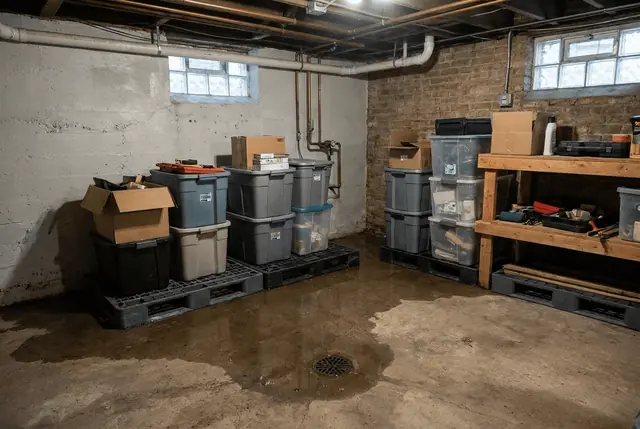
Water in a Chicago basement usually comes from one of four places: the sewer, the ground, a failed pump, or a leak. Knowing which one changes what will actually help.
Calls are answered by a referral service that connects you with a local plumbing provider. How this works
First: stay safe
Why Chicago basements are exposed
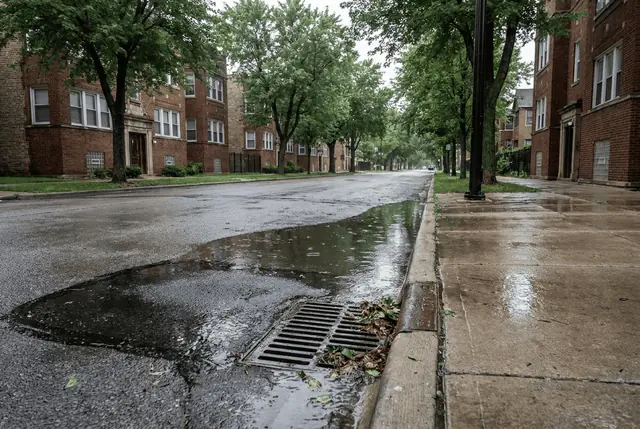
Most of Chicago — and many older suburbs connected to the regional system — is served by combined sewers that carry rainwater and wastewater in the same pipes to the Metropolitan Water Reclamation District (MWRD). During heavy rain, neighborhood sewers can fill faster than they drain. Water then pushes back up the building sewer and out of the lowest opening, often the basement floor drain.
MWRD notes that sewers in a neighborhood can back up into basements or streets even when there is extra room in its interceptor sewers and the Deep Tunnel system, because local sewers may lack capacity to carry water to them.
Source: Metropolitan Water Reclamation District — Understanding Your Sewer
- Basement floor drain — the lowest opening, so usually the first place sewer water appears.
- Private sewer lateral (building sewer) — typically the owner’s responsibility.
- Backwater valve — a flap that is meant to close when flow reverses; needs an access cover for cleaning and inspection.
- Combined street sewer — during heavy rain it can fill and back up toward buildings (MWRD).
Four common sources
| Source | How it usually shows up | Usually needs |
|---|---|---|
| Sewer backup | Rises from floor drain, toilet or shower; gray or dark; sewage odor; during or after heavy rain, or when fixtures upstairs run | Plumbing: drain/sewer inspection, backflow protection |
| Groundwater | Seeps through wall joints or floor cracks after long rain | Drain tile/sump, or waterproofing (often not a plumber) |
| Sump failure | Pit overflowing; pump silent, cycling, or running nonstop | Pump repair/replacement, backup power |
| Plumbing leak | Steady water regardless of weather; near pipes or the water heater | Leak repair |
Protections for sewer backup
MWRD describes check (backwater) valves and overhead sewers as valuable improvements that prevent sewer backups when properly installed, and advises cleaning backwater valves following manufacturer instructions.
- Ejector pump with check valve lifts basement wastewater up; it needs power, so outages matter.
- Overhead sewer line runs near the basement ceiling.
- Building sewer exits the wall at a higher elevation.
- Former floor-level openings are sealed under the design.
| Aspect | Backwater valve | Overhead sewer |
|---|---|---|
| How it works | Flap closes when flow reverses | Building sewer connection raised; basement fixtures pumped up |
| Needs power | No (some designs add alarms) | Yes — ejector pump |
| Maintenance | Periodic cleaning and inspection | Pump and check valve maintenance |
| Usage during storms | Using drains while closed can back up inside | Upper floors drain normally |
| Permit | Typically yes — confirm locally | Typically yes — confirm locally |
Which is appropriate depends on the building, the sewer layout and local rules. Both are permit work in most municipalities.
Local programs and reporting
- Chicago: report flooding to 311. We did not find a City-funded private backwater-valve program at our last review.
- Oak Park: Sewer Backup Protection Grant — see Oak Park sewer backup protection.
- Other suburbs (for example Des Plaines, Arlington Heights, Elmhurst, Morton Grove) have run cost-share or rebate programs; terms change, so confirm with the municipality.
When to call a professional
- Sewage has come up through a drain or toilet.
- Backups repeat in dry weather (likely a blockage or damaged line).
- The sump pump is not running, or runs constantly.
- You are considering a backwater valve or overhead sewer.
What affects the cost of a fix
Cause of the water; access (finished basements, concrete floors); building sewer depth and condition; whether a camera inspection is needed; permits; whether work extends to the public way; and pump power/backup choices. We do not publish prices.
Frequently asked questions
Why does my basement flood even though the City has the Deep Tunnel?
The regional tunnel and reservoir system reduces overflows, but the reclamation district (MWRD) notes that small neighborhood sewers can still fill and back up into basements even when the large interceptors and tunnels have room.
Is sewer backup the same as groundwater flooding?
No. Sewer backup comes up through drains and is contaminated. Groundwater seeps through walls or the floor, or is handled by a sump pump. They need different fixes. Use the basement water guide to compare the signs.
Who do I report street or sewer flooding to in Chicago?
MWRD advises reporting flooding to your municipality; in Chicago, that is 311.
Is there a City program that pays for a backwater valve?
As of our last review we did not find a City of Chicago program that funds private backwater valves; some aldermen have requested one. Several suburbs, such as Oak Park and Des Plaines, run their own grant or rebate programs. Check current terms with your municipality.
Related
- Basement water guideCompare signs
- Drain cleaningDry-weather backups
- Oak Park sewer backup protectionVillage grant
- Backwater valves & overhead sewersProtection options
Sources
- Metropolitan Water Reclamation District — Understanding Your Sewer Official / primary
- City of Chicago DOB — Blocking Rainwater and Preventing Sewer Backup Official / primary
- Village of Oak Park — Sewer Backup Protection Grant page Official / primary
Information can change; official sources control.