
Property guide · Chicago
Plumbing in two-flats, three-flats & greystones
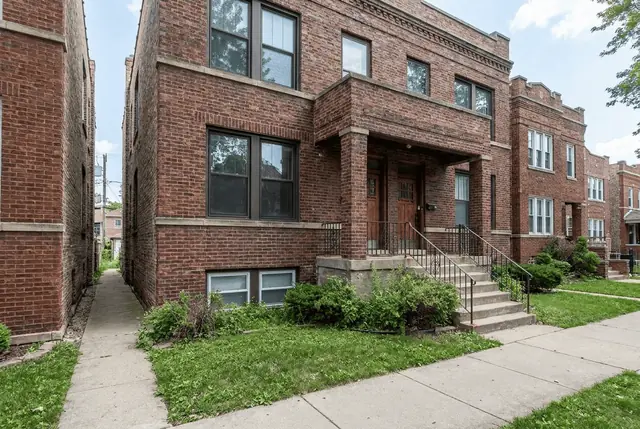
One building, several households, shared pipes. Here is how plumbing typically works in Chicago’s 2–4 unit buildings and why problems travel between units.
Calls are answered by a referral service that connects you with a local plumbing provider. How this works
A Chicago building type
26%
of Chicago housing units are in 2–4 unit buildings
Source: DePaul Institute for Housing Studies — Characteristics of the 2 to 4 stock in Chicago neighborhoods. 2020 data
70%+
of units in South Lawndale and Brighton Park are in 2–4 unit buildings
Source: DePaul Institute for Housing Studies — Characteristics of the 2 to 4 stock in Chicago neighborhoods
Many of these buildings date from the late 1800s to the 1930s. Over a century, plumbing is often a mix of original and replaced materials.
How the plumbing is laid out
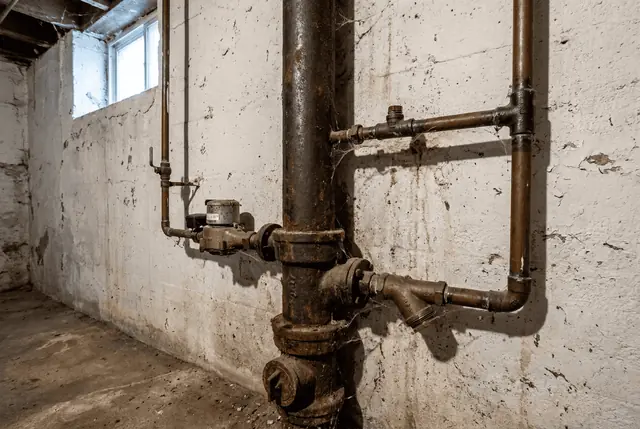
- Shared drain-waste-vent stack — a clog or crack affects every unit above it; older buildings often have cast iron.
- Shared water riser — corrosion and scale in older galvanized pipe can reduce pressure for all units.
- Garden/basement unit — lowest fixtures, so most exposed to backups.
- One building sewer serves the whole building.
Typically, fixtures stack vertically so each unit’s kitchen and bathroom drain into a shared drain-waste-vent stack, which feeds a single building sewer. Water comes in through one service line and meter and rises to each unit.
Common problems
| Problem | Why it happens | Who notices first |
|---|---|---|
| Leak into the unit below | Failing fixture seals, shower pans, drain joints or supply connections above | Lower unit |
| Garden-unit backup | Lowest fixtures in the building; shared building sewer or street sewer surcharge | Basement / garden unit |
| Low pressure upstairs | Scale inside older galvanized supply pipe, shared riser | Top unit |
| Rust-colored water | Corroding galvanized pipe | Any unit |
| Cracked cast-iron stack | Age and corrosion, often at joints | Stains or odor on walls |
Based on common patterns reported by owners and inspectors; your building may differ.
Coordinating between units
- Shutting off water for repairs often affects every unit — give notice.
- Access to the stack or cleanouts may be through another unit or the basement.
- Keep a simple record of shutoff locations, cleanouts and past repairs.
- Tenants should report slow drains and leaks early; problems in shared lines grow.
Permits and licensing in Chicago
Removing and replacing any drain, water, soil, waste or vent pipe, or a concealed trap, requires a permit and inspections under the Chicago Municipal Code.
Most plumbing work in Chicago must be done by a licensed and bonded plumbing contractor with a City license. Chicago permits explained.
What affects the cost of work
How many units are affected; access through finished spaces; pipe materials; whether walls must be opened; permit requirements; and whether work is done in stages. We do not publish prices.
Frequently asked questions
Who is responsible when a leak from upstairs damages my unit?
That depends on ownership (condo association, single owner, landlord–tenant), your lease or declarations and insurance. A plumber can find the source; responsibility is a legal and insurance question.
Why is the basement unit always the one that backs up?
It has the lowest fixtures in the building, so when the shared building sewer or the street sewer backs up, water reaches those openings first.
Should we replace all the old pipe at once?
Not necessarily. Owners often replace sections as problems appear or during renovations. A provider can assess condition. Replacing drain, waste, vent or water piping in Chicago requires a permit.
Related
- Logan SquareGreystones and two-flats
- Pipe materialsGalvanized & cast iron
- Drain cleaningShared lines
- Basement floodingGarden units
Sources
- DePaul Institute for Housing Studies — Characteristics of the 2 to 4 stock in Chicago neighborhoods Secondary
- Municipal Code of Chicago, Ch. 14A-4 (Permits) Official / primary
- City of Chicago — Does my project require a licensed plumbing contractor? Official / primary
Information can change; official sources control.