
Problem · Seasonal
What should I do if my pipes freeze?
A faucet that gives a trickle or nothing on a bitter morning usually means ice in the line. Act carefully — the real damage often appears when it thaws.
Calls are answered by a referral service that connects you with a local plumbing provider. How this works
Signs a pipe is frozen
- Little or no water at one fixture while others work.
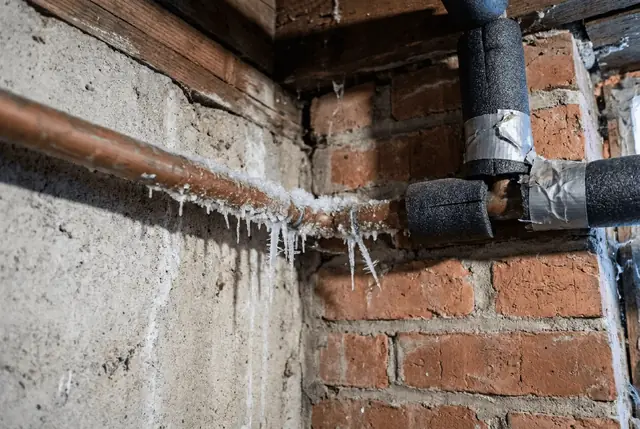
- Frost on an exposed pipe.
- A fixture on an exterior wall, over an unheated porch, crawlspace or garage stops working.
- Odd odors from a drain (the line may be blocked by ice).
Safe first steps
- Know where your main shutoff is — be ready to close it if the pipe has split.
- Open the affected faucet slightly so melting water can flow.
- Raise the heat and open cabinet doors to let warm air reach pipes under sinks.
- If the frozen section is inside a wall or ceiling, or you cannot find it, call a professional.
- Watch for leaks as things warm up.
Why Chicago winters cause trouble
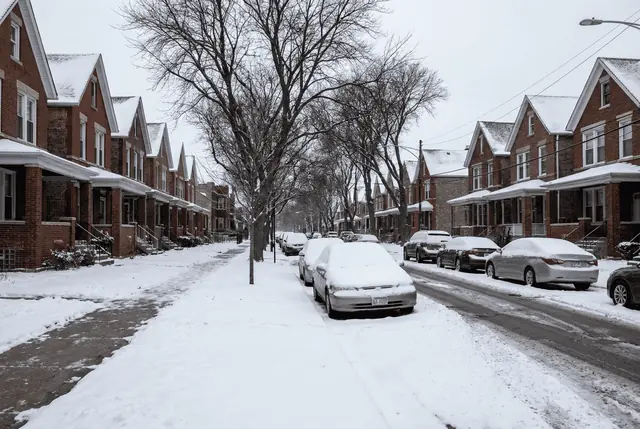
Chicago’s water mains are typically buried 5 to 6 feet deep, below the usual frost line — but during the January 2019 polar vortex, extreme cold drove frost deeper, and widespread burst pipes and main breaks were reported.
Source: AP via GBH News — Polar blast strains aging infrastructure (Jan. 30, 2019)
Inside homes, the problem is usually local exposure: plumbing in exterior walls, enclosed back porches common on two-flats and three-flats, crawlspaces, and additions with little insulation.
Where pipes are exposed by building type
| Building | Typical exposed locations |
|---|---|
| Two-flat / three-flat | Enclosed rear porches, kitchen walls on the exterior, basement walls near rim joists |
| Bungalow | Kitchen sink on an exterior wall, attic or dormer bathrooms, basement near windows |
| Suburban ranch / split-level | Crawlspaces, garages, hose bibs, lines in exterior walls |
| Condo | Units with plumbing on exterior walls; building-wide risks are a management issue |
General patterns only; every building is different.
When to call a professional
- A pipe has split or is leaking.
- The frozen section is in a wall, ceiling or crawlspace.
- Several fixtures or the whole building have no water.
- You suspect the water service line itself is frozen.
Preparing before the next cold snap
- Disconnect hoses and close interior shutoffs to outside faucets, then drain them.
- Insulate pipes in unheated spaces.
- Keep heat on in unoccupied units; for multi-unit buildings, coordinate with tenants.
- Seal drafts near pipes (rim joists, porch walls).
Frequently asked questions
At what temperature do pipes freeze?
There is no single number. It depends on how long the cold lasts, wind, insulation and where the pipe runs. Pipes in exterior walls, unheated porches, crawlspaces and garages are most exposed.
Should I let a faucet drip?
Many utilities and safety organizations suggest letting a faucet on an exposed line trickle during extreme cold, because moving water is less likely to freeze. Check guidance from your water utility.
The pipe thawed and now it is leaking. What now?
Close the main shutoff or the nearest valve if you can do so safely, keep people away from water near electrical equipment, and call for help. Damage often shows only after thawing.
Related
- Two-flat plumbing guidePorches and shared lines
- Pipe materialsOlder pipes
- Winter pipe preparationBefore the freeze
- Emergency plumbingBurst pipe steps
Sources
- AP via GBH News — Polar blast strains aging infrastructure (Jan. 30, 2019) Secondary
- Illinois State Climatologist — Chicago O’Hare climate normals (1991–2020) Official / primary
- National Weather Service Chicago — climate normals Official / primary
Information can change; official sources control.