
Guide
Sump pump guide: testing, backup power and discharge
A sump pump is easy to forget until the night it fails. A few minutes a season keeps it ready.
Calls are answered by a referral service that connects you with a local plumbing provider. How this works
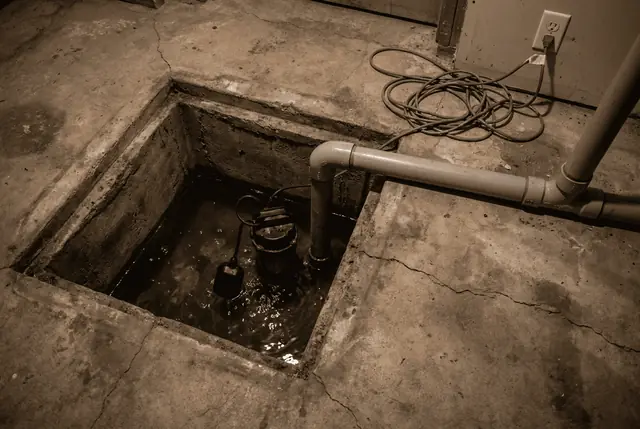
How the system works
- Drain tile collects groundwater around the foundation.
- Primary pump runs on household power.
- Battery backup pump can run during an outage, for a limited time.
- Check valve keeps discharged water from falling back into the pit.
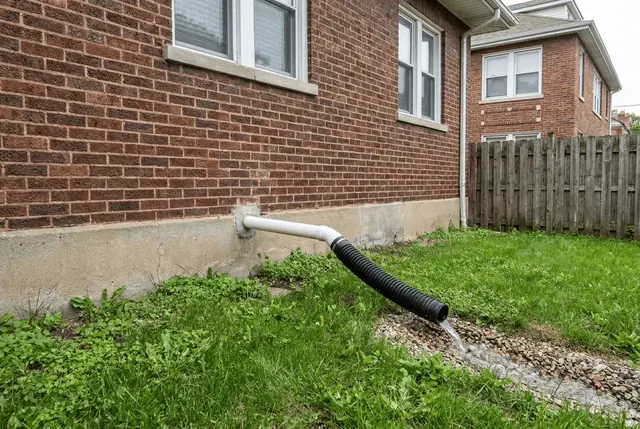
- Discharge outlet — local rules may say where it can discharge.
Testing safely
Safety first Do not reach into the pit while the pump is plugged in.
- Slowly pour a bucket of water into the pit.
- Watch the float rise and the pump start.
- Confirm the water level drops and the pump shuts off.
- Listen for water falling back after it stops (a failing check valve).
- Check the outside discharge for flow.
Backup options
| Option | How it works | Consider |
|---|---|---|
| Battery backup pump | Second pump on a battery | Runtime is limited; batteries age |
| Water-powered backup | Uses municipal water pressure | Depends on pressure and local rules |
| Generator | Powers the primary pump | Safe connection and fuel |
| High-water alarm | Alerts you before flooding | Low cost; no pumping |
Seasonal checklist
| When | What |
|---|---|
| Late winter | Test before thaw; clear ice from the discharge outlet |
| Spring | Expect frequent cycling; confirm backup is charged |
| Summer storms | Check alarms and backup |
| Fall | Clear leaves from the discharge; test again |
Discharge rules
Sump water should discharge outdoors, away from the foundation. Many municipalities prohibit sump pumps or footing drains connected to the sanitary sewer — Elmhurst’s overhead sewer program, for example, requires stormwater to be disconnected from it.
Frequently asked questions
How old is too old for a sump pump?
We don’t give a number — condition and testing matter. Noisy, slow or frequently tripping pumps should be checked.
Is a backup pump worth it?
Storms that bring heavy rain often bring outages. Many owners in flood-prone areas consider some form of backup.
Related
- Sump pump repair & installationService
- Sump pump keeps runningTroubleshooting
- Naperville sump pumpsSubdivision homes
- Ranch & split-level homesLower levels
Sources
- City of Elmhurst — Overhead Sewer Program (2023 PDF) Official / primary
- City of Des Plaines — Flood Rebate Program Official / primary
Information can change; official sources control.