
Problem · Chicago area
Why does my basement smell like sewage?
A sewer smell usually means sewer gas is getting past a seal that should stop it. Most causes are simple; a few need a professional.
Calls are answered by a referral service that connects you with a local plumbing provider. How this works
Common causes
| Source | Clue | What helps |
|---|---|---|
| Dry floor-drain or laundry-tub trap | Smell near a drain that is rarely used | Pour water into the drain |
| Loose or missing cleanout cap | Smell near a cleanout plug | Replace or tighten the cap |
| Ejector pit lid not sealed | Smell near a basement bathroom pit | Professional re-seal |
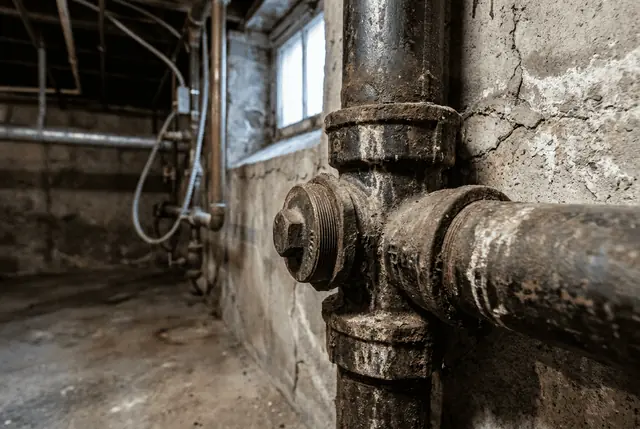
| Cracked cast-iron drain or stack | Rust, stains, moisture on old pipe | Repair or section replacement |
| Blocked or failed vent | Gurgling drains, smell after flushing | Vent inspection |
| Failed wax seal at a toilet | Smell around the base of a toilet | Reset the toilet |
Older buildings
Chicago bungalows and two-flats often still have cast-iron drains and stacks. Hairline cracks and rusted joints can release odor before they leak. In overhead-sewer conversions, the sealed ejector pit lid is another common source.
- Ejector pump with check valve lifts basement wastewater up; it needs power, so outages matter.
- Overhead sewer line runs near the basement ceiling.
- Building sewer exits the wall at a higher elevation.
- Former floor-level openings are sealed under the design.
Safety
Frequently asked questions
Is sewer gas dangerous?
Sewer gas can contain hydrogen sulfide and other gases. Persistent odor should be found and fixed, and strong odor means ventilate and step away.
Why does it smell only sometimes?
Traps dry out slowly, and pressure changes in the sewer (wind, heavy flows) can push gas through weak seals.
Can a plumber find the source?
Yes — a smoke or peppermint test of the drain system is a common way to find leaks in drains and vents.
Related
- Floor drain backupFloor drains
- Sewer line repairCracked drains
- Pipe materialsCast iron
- Toilet installation & repairFailed seals
Sources
- Metropolitan Water Reclamation District — Understanding Your Sewer Official / primary
- Chicago Metropolitan Agency for Planning — Local Housing Profiles Official / primary
Information can change; official sources control.