

Property guide · Chicago
Plumbing in condos and high-rises
In a condo, the first question is often whose pipe it is. The second is what the building allows. Here is how responsibility and access usually work.
Calls are answered by a referral service that connects you with a local plumbing provider. How this works
Owner vs association
| Part | Usually | Notes |
|---|---|---|
| Fixtures, faucets, toilets inside the unit | Unit owner | |
| Supply lines and valves after the unit shutoff | Unit owner | Varies by declaration |
| Risers and stacks | Association | Shared by many units |
| Building water heaters, pumps, sewer | Association | |
| In-unit water heater | Unit owner | Where buildings have them |
Condo declarations and bylaws control; this is a general pattern.
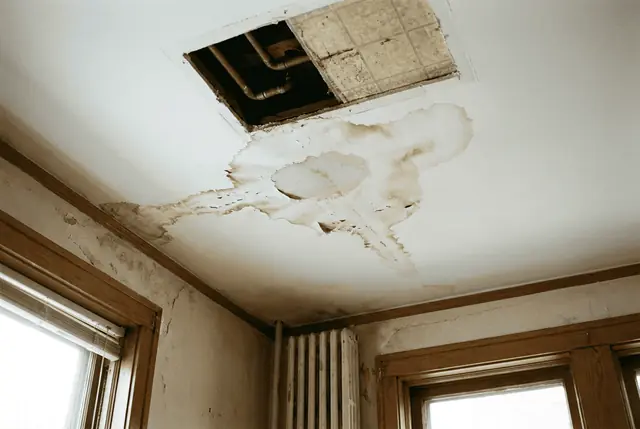
Leaks into the unit below
- Shared drain-waste-vent stack — a clog or crack affects every unit above it; older buildings often have cast iron.
- Shared water riser — corrosion and scale in older galvanized pipe can reduce pressure for all units.
- Garden/basement unit — lowest fixtures, so most exposed to backups.
- One building sewer serves the whole building.
Common sources are shower pans and tub drains, toilet seals, supply lines to sinks and toilets, dishwashers, washing machines and in-unit water heaters. Stop the water at the fixture or unit shutoff, tell management, and document everything for insurance. Leak detection
Building rules for contractors
- Certificates of insurance naming the association.
- Approved work hours and elevator reservations.
- Building engineer present for riser shutoffs.
- Permits for work that requires them — the contractor must hold City licensing.
Prevention in units
- Know where your unit shutoff valves are.
- Replace rubber washing-machine hoses with braided ones; check them periodically.
- Consider leak sensors under sinks, the dishwasher and water heater.
- Report slow drains early — the stack serves your neighbors too.
Frequently asked questions
Can I hire my own plumber in a condo?
For work inside your unit, usually yes, subject to building rules. Work on risers or shared lines is arranged by the association.
Who pays when my leak damages the unit below?
That depends on the declarations and insurance policies involved. A plumber can document the source.
Related
- Near North SideHigh-rise neighborhoods
- Leak detectionFind the source
- Toilet repairFailed seals
- Water heatersIn-unit heaters
Sources
- City of Chicago — Does my project require a licensed plumbing contractor? Official / primary
- City of Chicago DOB — Plumbing Contractor License Official / primary
Information can change; official sources control.